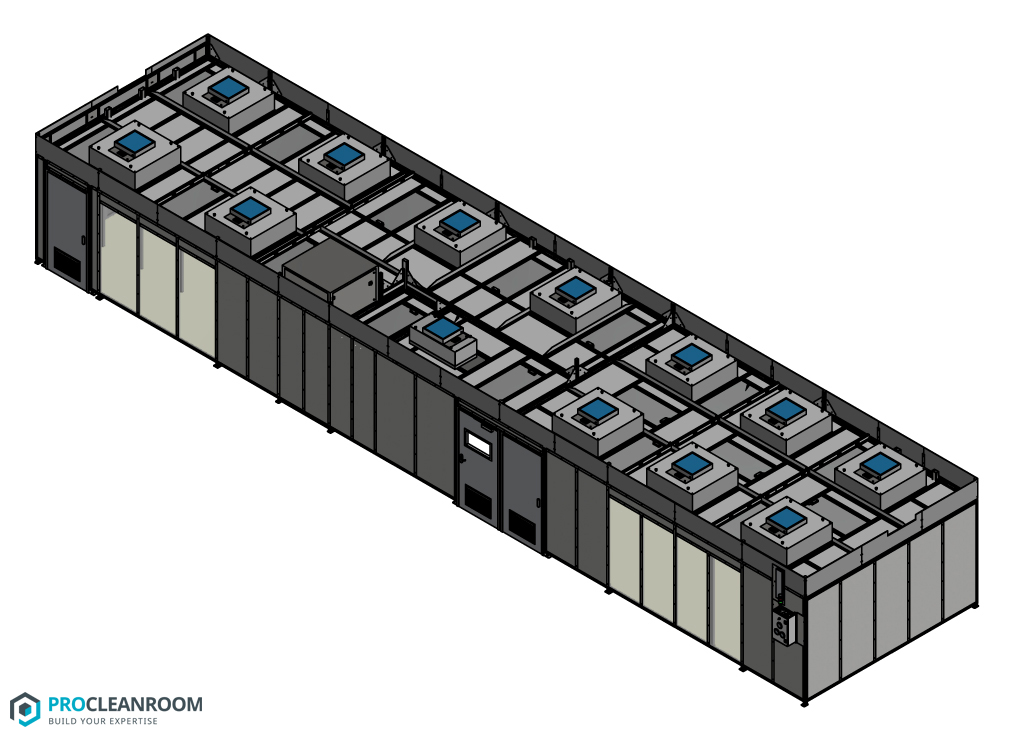
Do you know whether your cleanroom still meets the desired ISO class?
Managing Director Niels Ferguson explains: “Due to use, aging, contamination or damage to components, it is possible that the cleanroom no longer achieves its desired ISO class. A higher than desired ISO-class can have very adverse effects on the work process and end product(s).”
For example:
- More time and effort may be required to clean the end product to the correct specifications (Grade 4 and Grade 2 specs, for example). Which results in a lower production speed.
- Larger amount of cleaning products are needed to achieve the desired specifications. Which results in higher production costs per product.
- The product can become contaminated after cleaning and inspection, before it is packaged.
“Cleanroom – Room in which the concentration of airborne particles is controlled and classified, and which is constructed and used in a manner to minimize the introduction, generation and retention of particles inside the area.”
Ref. International standard ISO14644 first edition 2015.
| Cleanroom Standard | Cleanroom Classification Guidelines | |||||
| ISO 14644-1 | Class 3 | Class 4 | Class 5 | Class 6 | Class 7 | Class 8 |
| Federal Standard 209E | 1 | 10 | 100 | 1.000 | 10.000 | 100.000 |
| EU GGMP | – | – | A/B | – | C | D |
| Air changes / hour | 360-540 | 300-540 | 240-480 | 150-240 | 60-90 | 5-48 |
Validation interval
According to ISO14644-1:2015, cleanroom and flow cabinet have to be validated in accordance with a maintenance and validation program tailored to the individual process.
In practice, this usually leads to a validation interval of 12 months of cleanrooms with ISO class 6 or higher. For cleanrooms or flow cabinets with ISO class 5 or lower, the validation interval is usually 6 months.
ProCleanroom validation
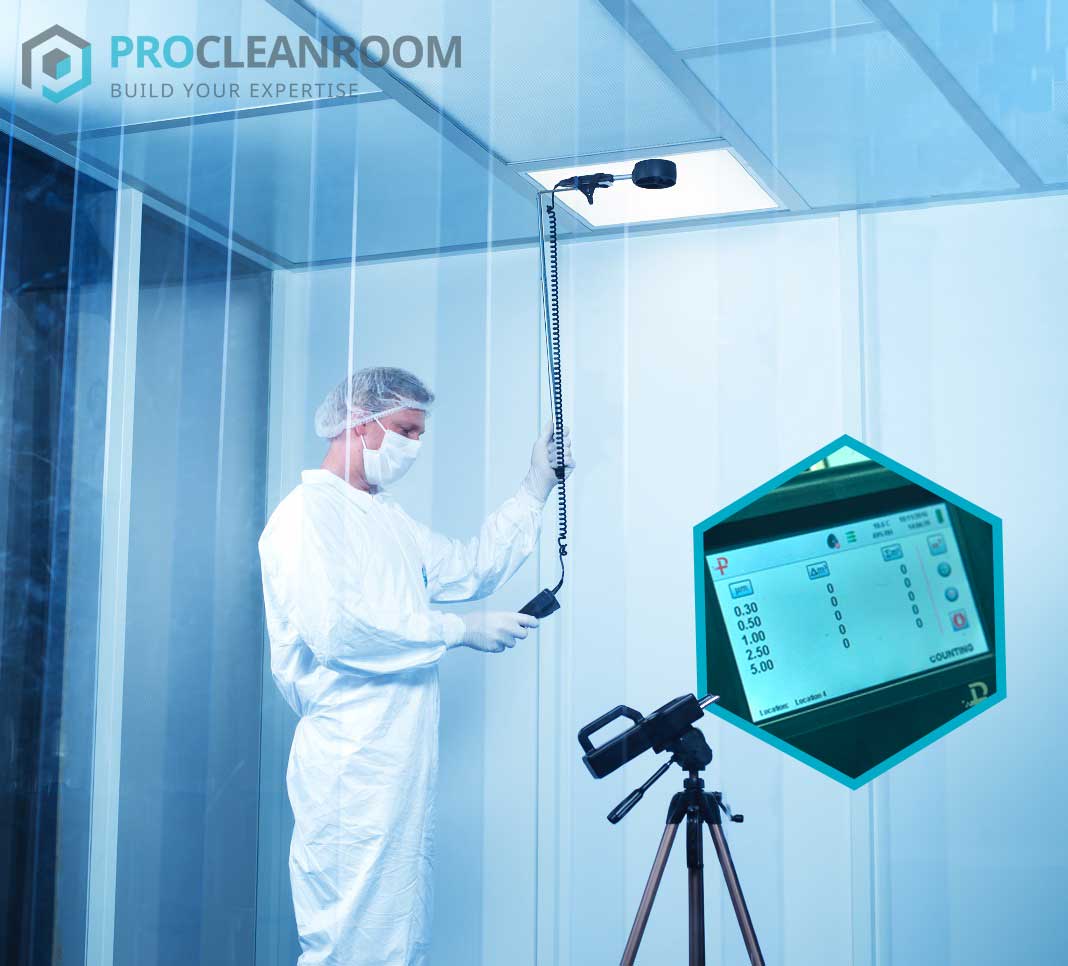
In consultation, our qualified CTCB-I engineers can perform the test below:
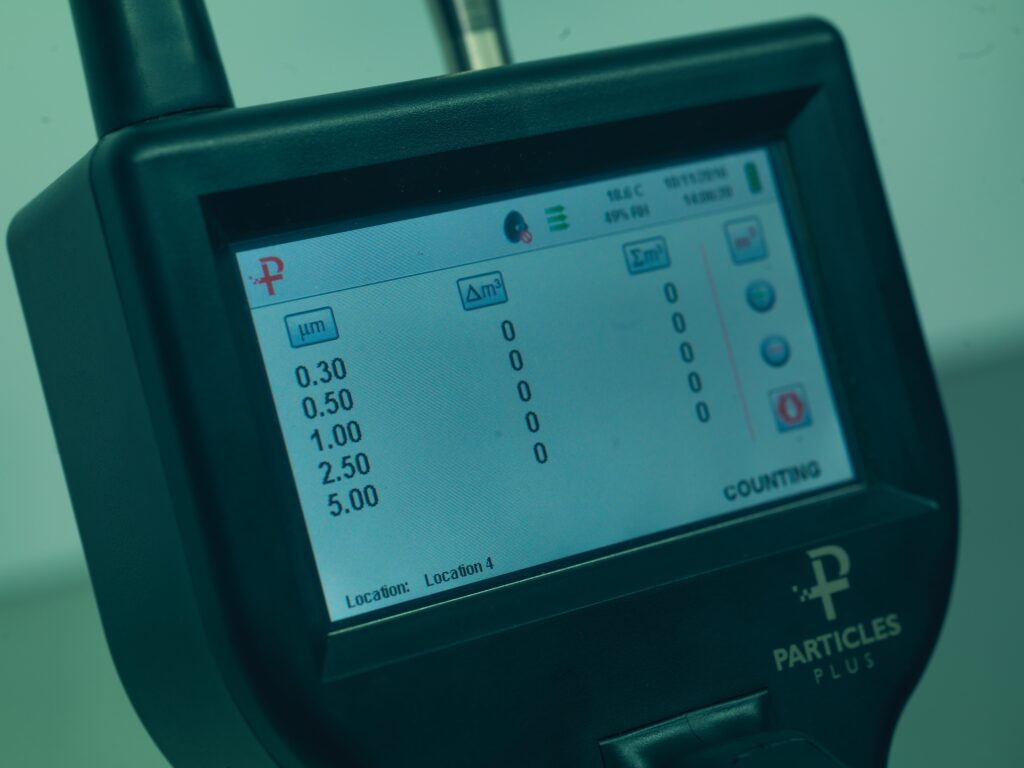
- Particle counts (concentration of airborne particles) – standard
- Measurement of air velocity
- Measurement of light intensity (lux)
- Air Changes (circulation rate)
- Pressure difference test
- Aerosol smoke visualisation test
- Measurement of noise – sound pressure level (dB (A))
- Temperature and humidity measurements
- HEPA or ULPA filter integrity test/efficiency test (Aerosol challenge/DOP test)
Selected Airborne Particulate Cleanliness Classes
For cleanrooms and clean zones shown in ISO 14644-1:2015
| ISO Classification Number | Maximum concentration limits (particles/m³ of air) for particles equal to and larger than the considered sizes shown below | |||||
| ≥0.1µm | ≥0.2µm | ≥0.3µm | ≥0.5µm | ≥1.0µm | ≥5.0µm | |
| ISO Class 1 | 10 | – | – | – | – | – |
| ISO Class 2 | 100 | 24 | 10 | – | – | – |
| ISO Class 3 | 1.000 | 237 | 102 | 35 | – | – |
| ISO Class 4 | 10.000 | 2.370 | 1.020 | 352 | 83 | – |
| ISO Class 5 | 100.000 | 23.700 | 10.200 | 3.520 | 832 | – |
| ISO Class 6 | 1.000.000 | 237.000 | 102.000 | 35.200 | 8.320 | 293 |
| ISO Class 7 | – | – | – | 352.000 | 83.200 | 2.930 |
| ISO Class 8 | – | – | – | 3.520.000 | 832.000 | 29.300 |
| ISO Class 9 | – | – | – | 35.200.000 | 8.320.000 | 293.000 |
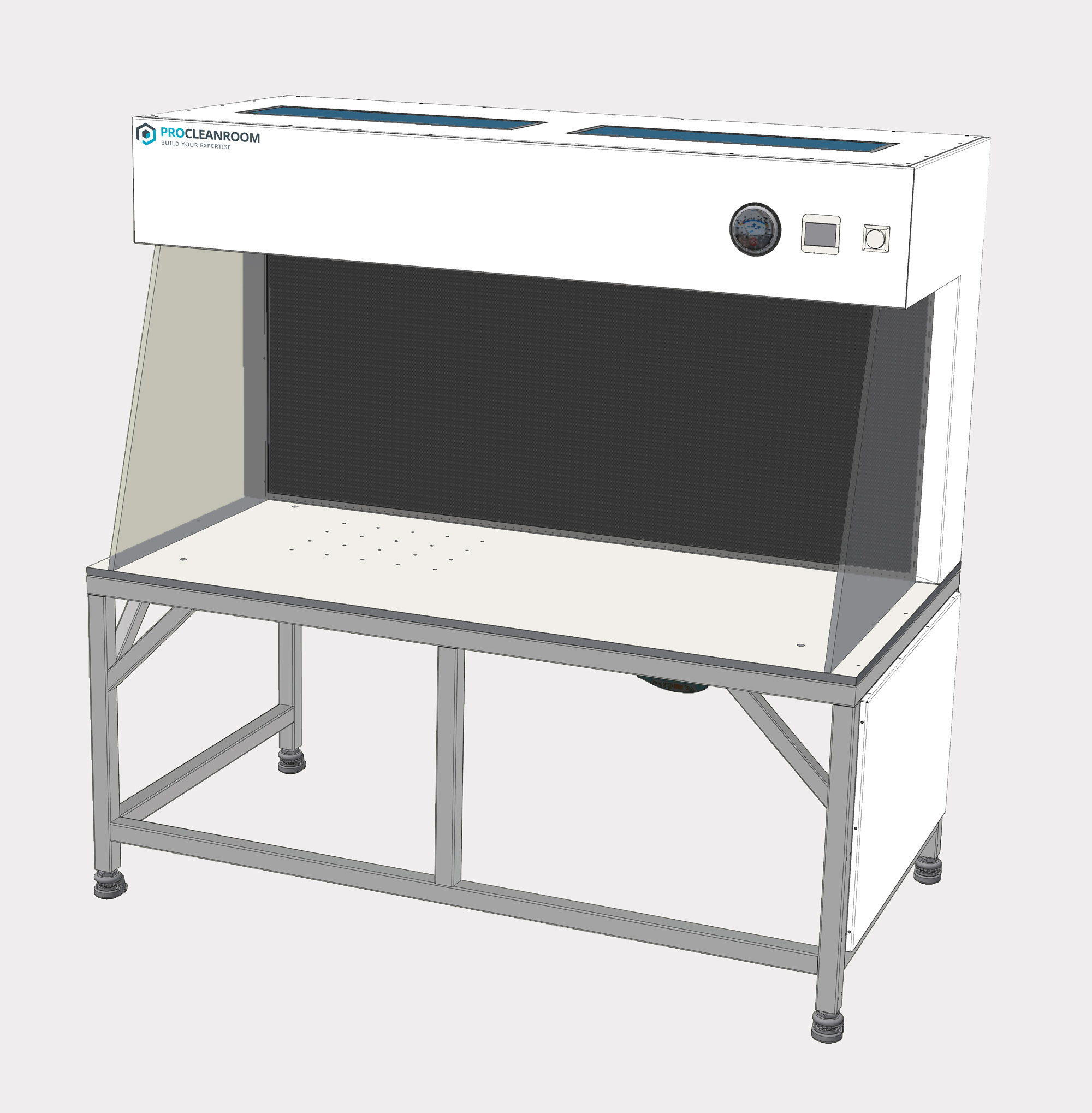
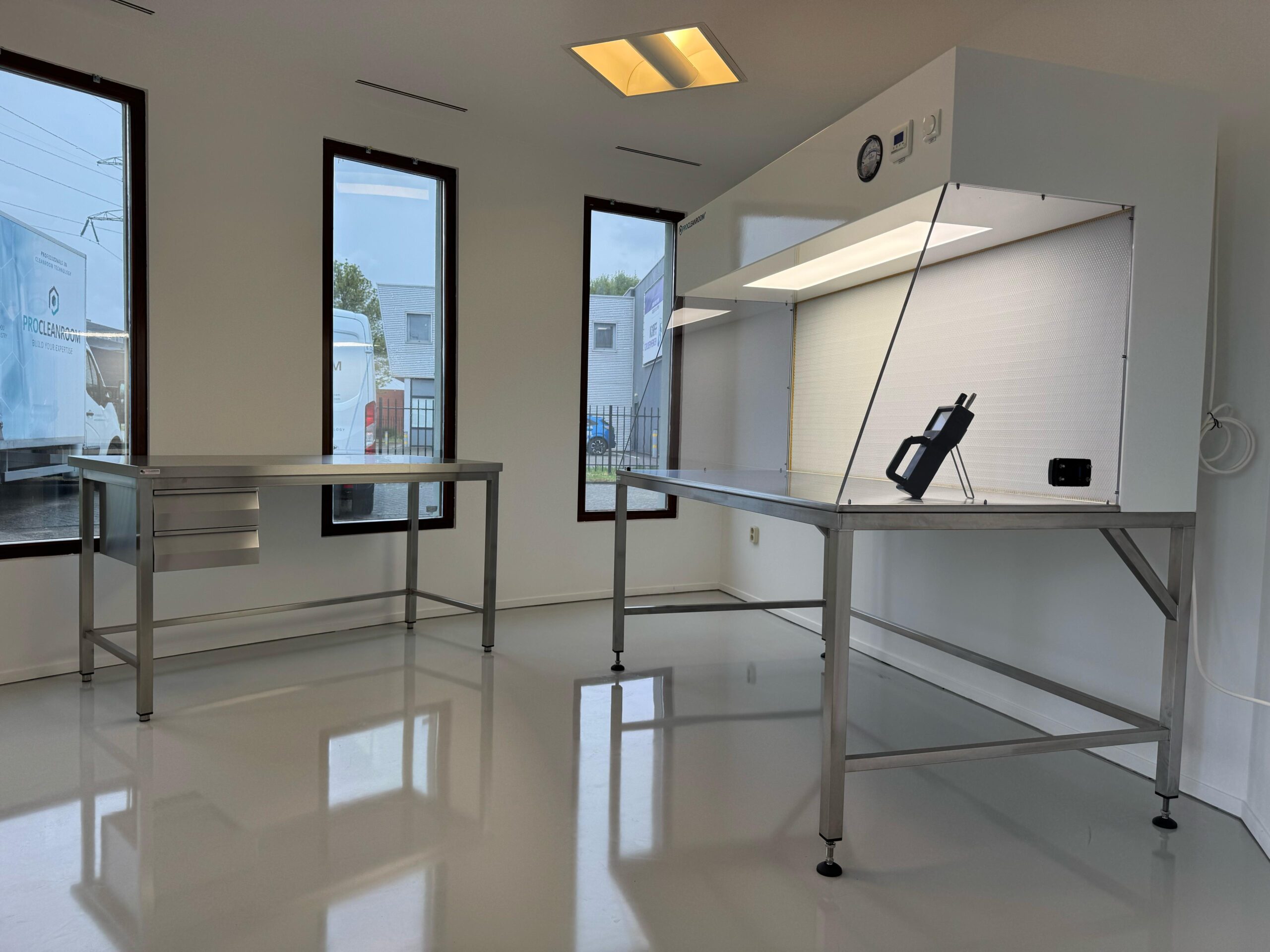
Do you want a cleanroom or flow cabinet that continues to perform according to the specifications? Then make an appointment!
ProCleanroom also validates fixed cleanrooms by other suppliers.
𝗣𝗿𝗼𝗖𝗹𝗲𝗮𝗻𝗿𝗼𝗼𝗺: 𝗕𝘂𝗶𝗹𝗱 𝘆𝗼𝘂𝗿 𝗲𝘅𝗽𝗲𝗿𝘁𝗶𝘀𝗲.